
India education funding gaps based on AISHE and NSSO Data.
Financing Higher Education in India: Public Commitment, Private Burden, and the 6% Debate
Published on 5th March 2026 at https://educationforallinindia.com
This article examines the long-standing policy commitment to allocate 6 percent of GDP to education in India, with particular attention to higher education financing. Using officially reported data and clearly distinguishing between narrow (Budget-based) and broad (consolidated ABEE) expenditure definitions, the paper analyses whether India’s public investment architecture aligns with expansion, equity, and research goals.
Financing Higher Education in India, Public Commitment, Private Burden, and the 6% Debate [PDF Version 4, improved over the previous versons]
The analysis shows that while aggregate education expenditure may approach 4–4.3 percent of GDP under broader accounting definitions, the narrow public expenditure series remains closer to 2.9 percent. Based on nominal GDP at current market prices (₹330.68 lakh crore for 2024–25), achieving the 6 percent benchmark would imply an education outlay of nearly ₹19.84 lakh crore — leaving a substantial financing gap depending on the expenditure definition used.
🔷 Executive Takeaways
•The 6% Target Remains Structurally Distant: At nominal GDP of ₹330.68 lakh crore (2024–25), achieving 6% would require ₹19.84 lakh crore in education spending. Under the narrow public expenditure series (~2.9% of GDP), the financing gap remains substantial.
•Broad vs Narrow Definitions Matter: Aggregate education spending may reach 4–4.3% of GDP under consolidated (ABEE-type) estimates, but direct budgetary public commitment remains significantly lower. The debate must distinguish between accounting expansion and real fiscal prioritisation.
•Higher Education Receives Less Than 1% of GDP: Despite expansion pressures, research ambitions, and institutional growth, higher education continues to receive only about 0.7–0.8% of GDP — limiting systemic transformation.
•Private Financing Now Dominates the Sector: Over 75% of higher education institutions and nearly two-thirds of enrolment are in the private sector, indicating a structural shift toward household-funded expansion.
•Equity Remains a Central Concern: GER disparities across social groups and wealth quintiles, along with rising household education expenditure shares, underscore the need for predictable, composition-sensitive public financing reform.
https://educationforallinindia.com
The paper further highlights that higher education receives roughly 0.7–0.8 percent of GDP, despite rising enrolment pressures, research ambitions, and institutional expansion. With more than 75 percent of higher education institutions in the private sector and nearly two-thirds of enrolment located in private institutions, the financing structure has gradually shifted toward household contributions.
Using AISHE and NSS-based evidence, the article documents disparities in Gross Enrolment Ratio (GER) across social groups and wealth quintiles, as well as the proportion of household consumption expenditure devoted to education by families with at least one higher education student. These patterns raise important questions regarding affordability, intergenerational mobility, and equity-sensitive public financing.
The article concludes that the debate on 6 percent of GDP should move beyond symbolic target-setting and focus instead on the composition, predictability, and public anchoring of education financing. Sustainable expansion and equity correction require not merely aggregate benchmarks, but structurally strengthened public investment in higher education.
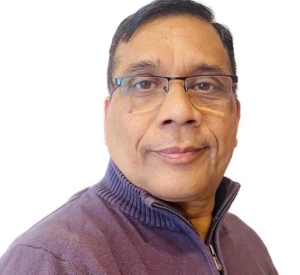
Author: Prof. Arun C Mehta, Founder, Education for All in India, Former Professor & Head, EMIS Department, NIEPA, New Delhi.
Prof. Arun C Mehta on LinkedIn

Education for All in India.